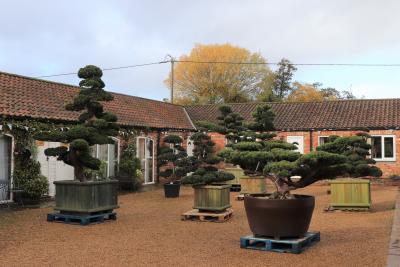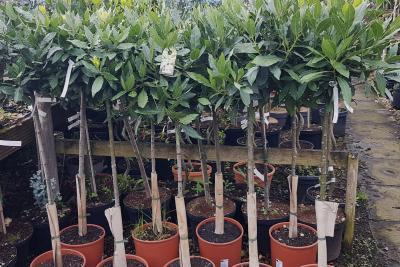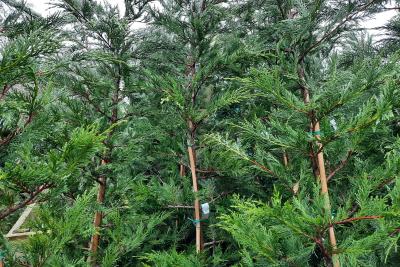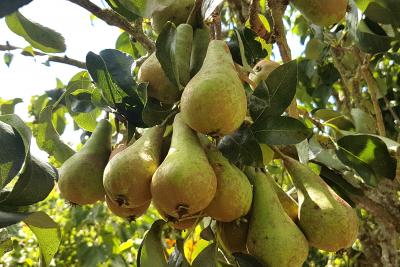
Here's some helpfull tips when planting your Trees: Soak the roots before planting : Avoid planting if there's a frost : Place your tree in a sunny/sheltered position. Help the roots to stimulate and establish more quickly by mixing in some farmyard manure.
Soil improver: organic soil improvers like farmyard manure open up the soils structure, breaking up heavy clay and helping free-draining soils hold on to moisture.
We can deliver trees within a 35 mile radius of the nursery.

Belle de Louvain are very large, oval-shaped, and dark red, becoming purple when fully ripe. This is primarily a culinary plum, the flesh is not particularly juicy, but reveals its true flavour when cooked. Vigorous tree. Self-fertile. Mid-season flowering. Pollination Group B.
Japanese type plum tree that produces firm, aromatic and juicy fruit. Large purplish red fruit with amber yellow flesh. It has a sweet amber clingstone flesh. Bears early and sets heavy crops. The sweet, uniquely flavoured fruit is ideal for eating, canning and making jam. Must be planted with another plum tree for pollination. Ripens mid-late summer.
Similar to the greengage but more reliable. A later flowering variety. Yellow-green juicy flesh and a beautiful flavour. Partly self-fertile but better with a partner. Vigorous growth and likes a warm location. Use for dessert or cooking.
A culinary Damson with a heavy crop of large blue-black fruits with yellow flesh. Harvest late September. Self-fertile. Mid season flowering. Pollination Group B.
Plum. A dual purpose plum, cooking or eating, with deep purple fruits. Ripening in July The flesh is pale yellow and quite sharp, self-fertile, mid season pollinator. Early and prolific.
Large blue plum ripening in September after the Victoria has finished. Creamy white flesh and heavy cropping. Mid season pollinating.
Dessert plum. Very large fruits of exceptional quality, similar to a Victoria. Pick in July. Needs a pollinating partner. Mid-season.
'Kordia' is an upright, deciduous fruit tree with ovate to oblong, toothed, dark green leaves turning orange and red in autumn and nodding, white flowers in mid-spring followed by small, glossy, edible, maroon fruit ready for harvest in early to midsummer.
Raised in Bedfordshire in 1900. Produces a red colour plum which is used as a good cooker. A self sterile tree which requires a pollinator.
Plum 'Mirabelle de Nancy' is a vigorous, upright variety producing heavy crops of classic, yellow, small French plums from September. The incredibly sweet, stone free fruits ripen from white to honey yellow and are excellent eaten fresh or cooked.
Plums are quite small and a dull green colour, turning slightly yellow when ripe. However this is one that you grow for flavour - for eating fresh it is exceptional. Prefers a sunny sheltered spot. Harvest early September. Self-fertile. Mid-late flowering. Pollination Group C.
A new early variety, great flavour. Gage like texture and easy to get flesh off the stone. Dessert plum with yellow flesh and red-purple skin. Harvest late July. Self-fertile. Mid season flowering. Pollination Group B.
A variety with great flavour for cooking and jam making. Medium golden yellow fruit produced in August. A good level of frost resistance. Self-fertile.
Plum producing large round fruit with a purple to golden yellow colour, juicy and excellent. Flowering mid season. Harvest mid-August. Early fertility. Regular high productivity. Sun exposure. Ordinary soil, not too dry to cool. Frost resistant.
Large blue plum ripening in September after the Victoria has finished. Yellow flesh and heavy cropping. Mid season pollinating.
Upright, deciduous fruit tree which spreads when mature and gets white flowers in late spring, followed by deep-red, sweet cherry fruit in late summer.
A small dual purpose plum with pale red fruits. Ripening in late August and early September. The flesh is greeny-yellow and of a good flavour. Self-fertile. Deciduous. Hardy.
A new variety of hybrid podocarpus with reddish-green foliage turning deep chocolate in winter.
Japanese Bitter Orange. A rounded shrub with very sharp spines, green leaves turn yellow in autumn. Fragrant white flowers followed by inedible fruits. Height 5m. Spread 5m. Flowers from May to June. Fruits from July Deciduous. Hardy. Shelter from cold drying winds.
Populus deltoides 'Purple Tower' is an attractive upright tree with eye-catching dark red / purple leaves. The leaves are supported on dark red stems speckled in beige. Ideal as a specimen tree for adding a splash of colour to your garden. Height 10m. Spread 3m.
Lombardy Poplar. A vigorous narrowly columnar tree with glossy dark green leaves turning yellow in autumn. Pendent catkins in spring. Height 30m. Spread 5m.
Lombardy Poplar. A vigorous narrowly columnar tree with glossy dark green leaves turning yellow in autumn. Pendent catkins in spring. Height 30m. Spread 5m.
Ornamental Cherry. A half standard cherry with pretty semi-double pale pink flowers opening from dark pink buds in early spring. Flowers from March to April. Deciduous.
Flagpole Cherry. A narrow erect tree with yellowish bronze leaves in spring. Pretty semi-double pale pink flowers in early spring. Height 8m. Spread 4m. Great for confined spaces or to create spatial arrangements.
Flagpole Cherry. A narrow erect tree with yellowish bronze leaves in spring. Pretty semi-double pale pink flowers in early spring. Height 8m. Spread 4m. Great for confined spaces or to create spatial arrangements.
Sweet Almond tree. A small deciduous tree prized for its edible nuts and fragrant spring blossom. Pale pink to white flowers in spring, green oval fruit.
Ornamental Cherry. A half standard with bronze leaves when young. turning red in autumn. Pretty double white flowers in mid-spring. followed by red fruit.
Ornamental Cherry with long sweeping ornamental branches with white blossom in spring. Good spring and autumn leaf colour.
Cherry Plum. Myrobalan. A spreading tree with dark purple leaves red when young. Pretty pink flowers in early spring. Height 10m. Spread 10m. Flowers from March to April. Deciduous. Hardy.
Cherry Plum. Myrobalan. A spreading tree with dark purple leaves red when young. Pretty pink flowers in early spring. Height 7m. Spread 4m. Flowers from March to April. Deciduous. Hardy.
A small tree with dark purple-red leaves. Pale pink flowers fading to white in early spring. Height 8m. Spread 5m. A great tree for foliage contrast.
Grows to become a small tree with a compact spherical crown. Depending on the site of the graft it attains a height of 3.5 - 5 m. The crown grows to approx. 1.5 - 2 m wide and at a later age has a tendency to droop somewhat. The bark turns from grey to dark reddish-brown; young twigs have a silver-grey colour. The fairly small dark green leaves are ovoid to obovate and measure 3-5 cm. In the autumn they turn bronze-red to orange-yellow. The tree produces white single flowers in April. They grow in bundles of 2 to 4. The round red fruits, measuring approx. 1 cm, do not appear very often. The tree requires fertile and humid soil.
Grows to become a small tree with a compact spherical crown. Depending on the site of the graft it attains a height of 3.5 - 5 m. The crown grows to approx. 1.5 - 2 m wide and at a later age has a tendency to droop somewhat. The bark turns from grey to dark reddish-brown; young twigs have a silver-grey colour. The fairly small dark green leaves are ovoid to obovate and measure 3-5 cm. In the autumn they turn bronze-red to orange-yellow. The tree produces white single flowers in April. They grow in bundles of 2 to 4. The round red fruits, measuring approx. 1 cm, do not appear very often. The tree requires fertile and humid soil.
Ornamental Cherry. Strong growing medium sized tree. Large, white, semi-double flowers. Richly scented. Height 10-20m. Broadly columnar. Flowers from March to April. Deciduous.
Ornamental Cherry. A vase shaped tree, conical when young, large pale pink flowers in clusters appear with the new leaves in spring. Great leaf colour in both spring and autumn. Height 10m.
Mon - Fri 8:00am - 5:00pm
Sat & Sun 9:00am - 5:00pm

Any questions? Email us or give us a call on 01904 400092.