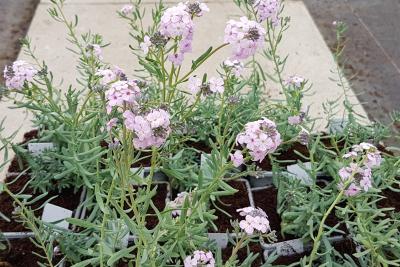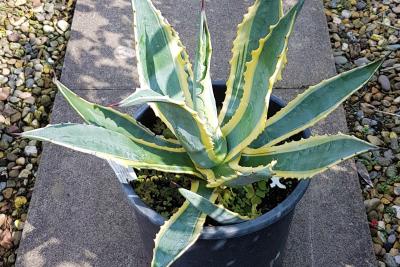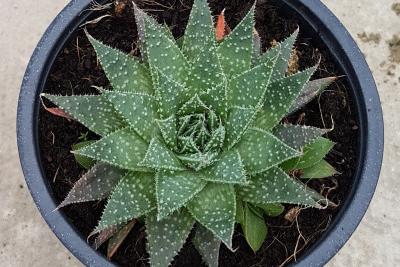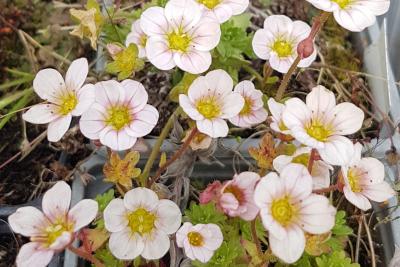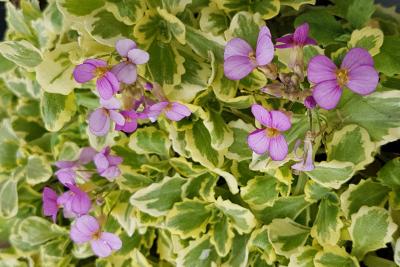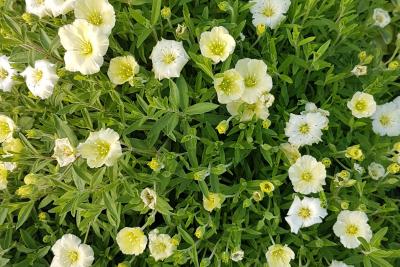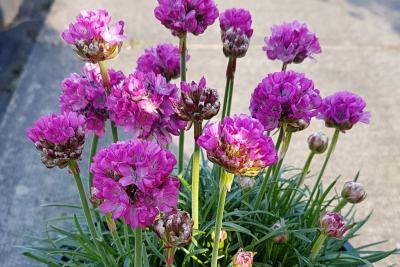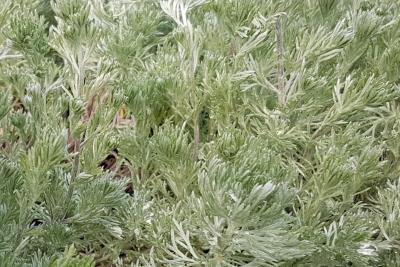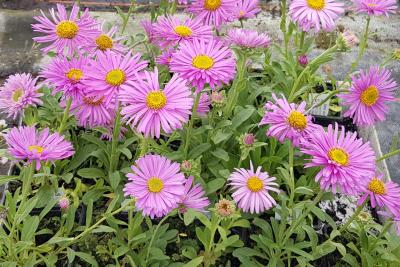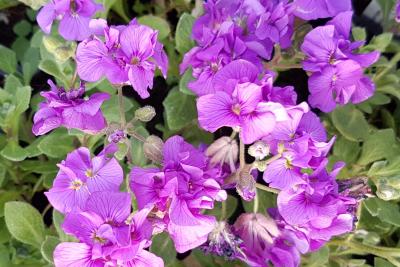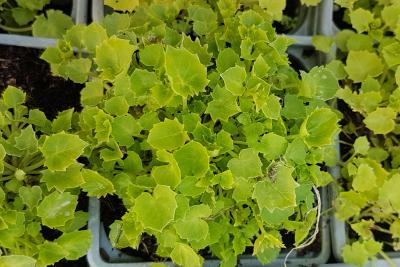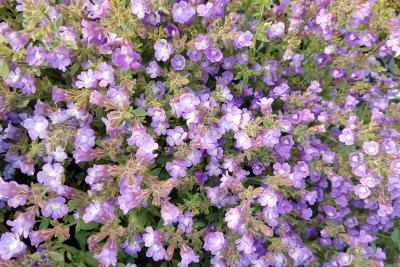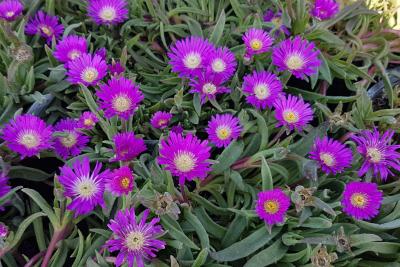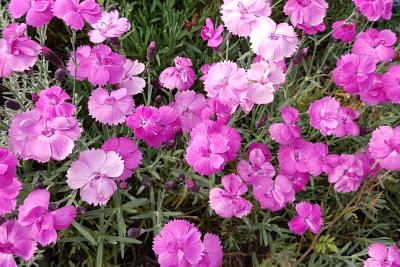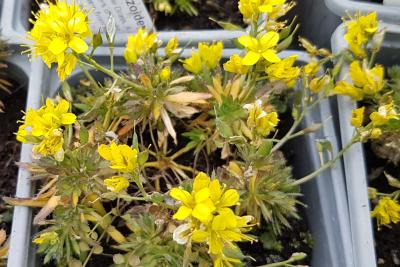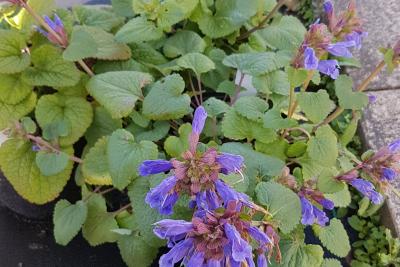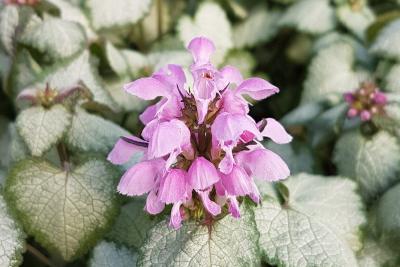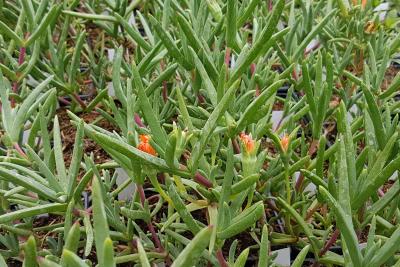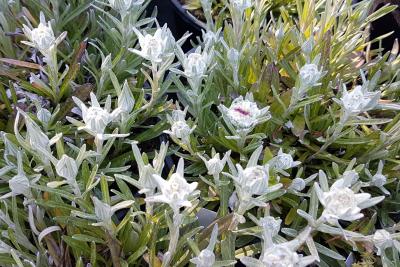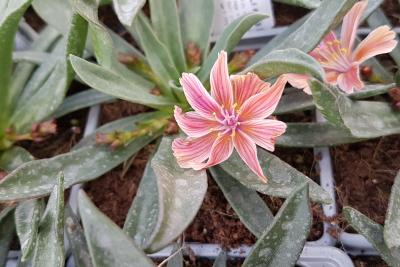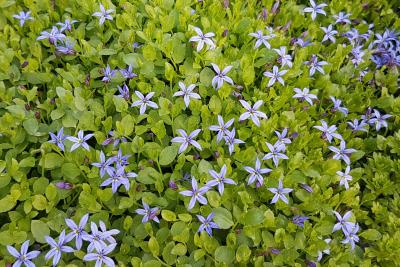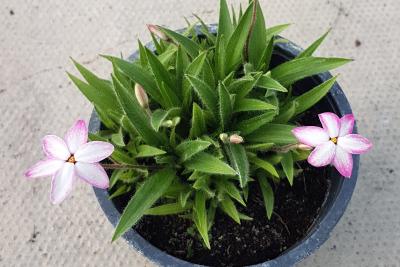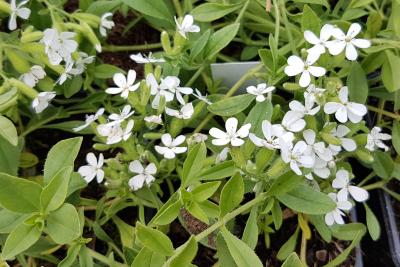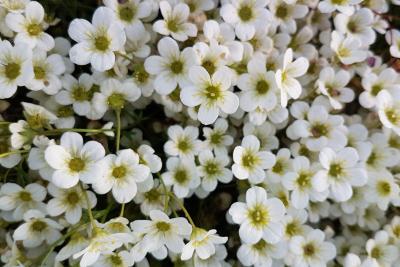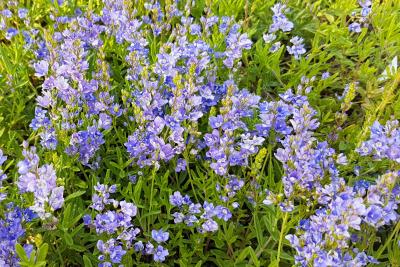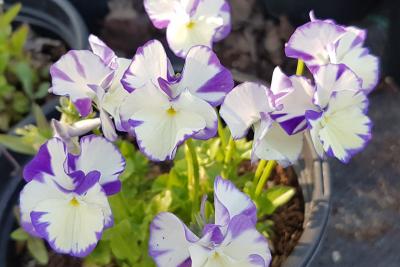
Alpines are plants found in high mountainous areas generally above the natural tree line. They are usually exposed to wide ranging temperatures: very freely draining low nutrient soils: strong winds and high light levels. To survive these conditions they have evolved a number of defences because they are low growing, mat or cushion-forming plants. They are protected against harsh winds and cold: they are dormant under snow; they have extensive root systems to seek out moisture and nutrients: they often have spiny growths to deter grazing animals. These conditions are different to a British winter but provided you bear in mind their natural growing conditions, you can grow them quite successfully.
How to grow Alpines
These dwarf plants offer a huge choice of flower colour and also of shape, foliage and a diversity of usage. Used in a rockery, spectacular displays can be achieved with the colour and form of the plants complimenting the rocks. They also make good container plants on patios and are good in old sinks and troughs and raised beds. Some will grow well in hanging baskets and in crevices in walls, or paving stones. Types such as Thyme can be planted en-masse to give a colourful and scented carpet.
Alpines in containers
Alpines can live in containers for many years and dwarf types especially benefit from being displayed in raised sinks or troughs so that their minute detail can be better appreciated. Smaller containers will need holes in the bottom to let excess water drain off. Always put a layer of broken crocks in the bottom to help with drainage and ensure the roots never sit in water. Provide a planting mix of 30% general purpose compost, 30% leafmould or garden compost and 40% added grit. Top dress with gravel and place in a sunny location. Water regularly but not excessively. Keep alpines even drier in winter, but do not allow to dry out. Feed with a general fertiliser at just a 1/4 of the manufacturers recommended strength for other plants in mid-spring. Keep free from weeds and pick off any dead leaves and prune as needed. Move pots into a cool well ventilated greenhouse in winter.
Creating a rockery
A rockery is intended to give the appearance of a rock outcrop mound in a mountanous region. The site is important and a bank is ideal, as building on a level surface seldom achieves a natural effect. The use of natural or imitation rock stone rather than broken concrete or old bricks is preferable. It is best to use one type of rock, choosing the largest pieces you can comfortably handle, although using some pieces will help give a natural effect.
When positioning your plants consider how they would appear in nature. Try to copy this natural look when building your rockery. Create pockets of suitable planting soil for the plants. To add interest vary the soil between the rocks. Bury the base of rocks and slope them back to help direct the rain into the pockets. Most alpines will tolerate any type of soil, providing it is well drained!.
Once the rockery is planted, cover the soil surface with small gauge gravel or shingle to enhance the look and keep the soil cool. Although many alpines grow on very poor soils, always water after planting and in very dry spells. Feed in spring with a general fertiliser at 1/4 strength for other plants to ensure best results.
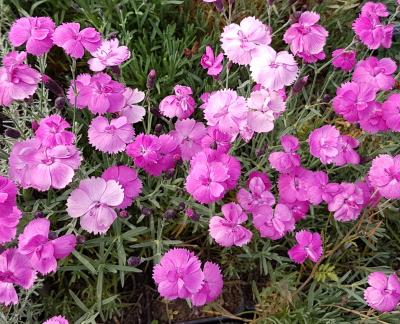
'Dinetta' is a small cushion-forming perennial with linear, grey-green evergreen leaves and double pink flowers in late spring through autumn.

An alpine pink forming a compact mound. Small, pink flowers. Height 5-8cm. Spread 20cm. Flowers from March to June. Evergreen. Hardy.
Striking pink flowers with a strong spicy scent are produced throughout summer above compact, evergreen plants. Particularly good for patio planters where the scent can be enjoyed on warm summer evenings. Also good in borders and rock gardens. Prefers full sun. Height - 23cm (9in).
The perfect patio pinks collection. These amazingly fragrant Dianthus produce a bushy, prolific perpetually flowering plant. Height and spread only 20-25cm. Fl. May-Sep.
Sweet, fragrant, lavender coloured flowers that are delicately flushed with white towards the 'picotee' frilled edges of the petals.
Striking pink flowers with a strong spicy scent are produced throughout summer above compact, evergreen plants. Particularly good for patio planters where the scent can be enjoyed on warm summer evenings. Also good in borders and rock gardens. Prefers full sun. Height - 23cm (9in).
Long flowering mixed colours. For beds tubs and borders.
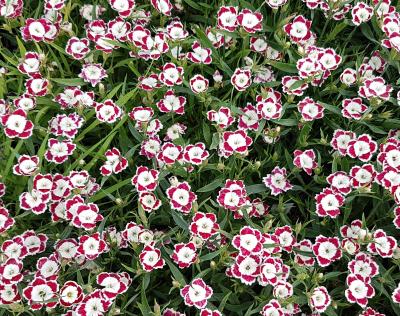
A tufted perennial with mid-green leaves. High-contrast white flowers with a ruby-coloured ring. Height 60cm. Spread 23cm.
A tufted perennial with mid-green leaves. Flowers pink with eye. Height 60cm. Spread 23cm.
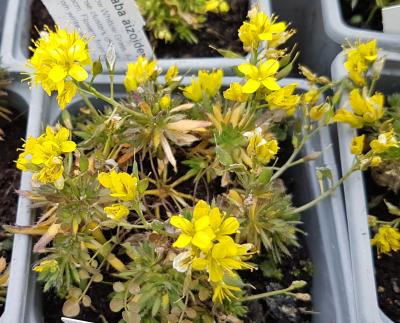
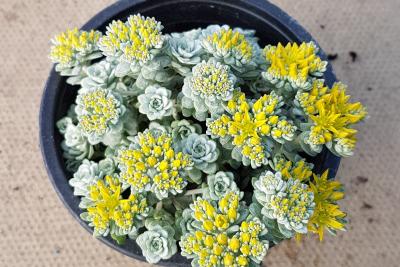
Yellow Whitlow Grass. A cushion of dark green rosettes with dense clusters of bright yellow flowers. Height 10cm. Spread 25cm. Flowers from March to April. Semi-evergreen. Hardy. Protect from winter wet.
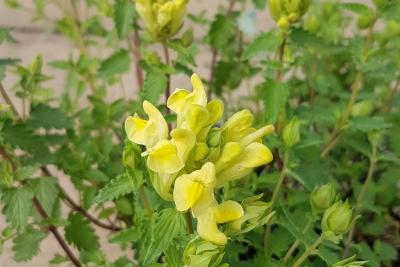
Dragon's Head. A clump-forming low perennial with small hairy leaves. Pretty white tubular flowers on leafy stems. Height 20-30cm. Spread 30cm. Flowers from June to July. Herbaceous. Hardy. Very drought tolerant once established.
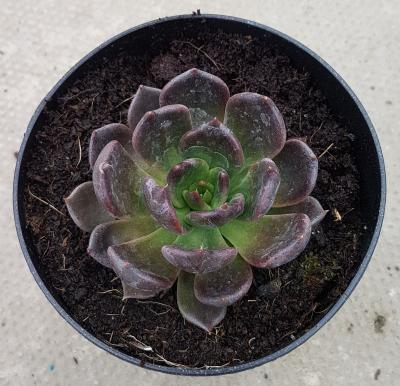
The darkest succulent with dark red/black foliage. Small scarlet flower in late season, Sept/Oct. Drought tolerant. Suitable for containers or screened gardens. Height 15cm, plant 15-22cm apart for good spread. Slow growing.
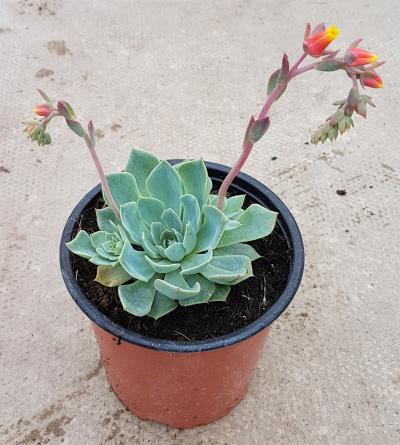
A good form of the increasingly popular carpet bedding plants. Steely grey-blue succulent foliage with bronze tinges and vibrant orange flowers in summer. Prefers full sun or partial shade with free-draining soil or compost.
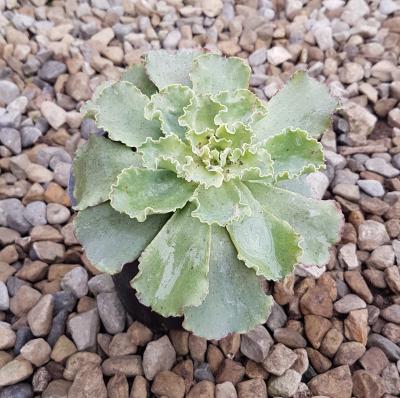
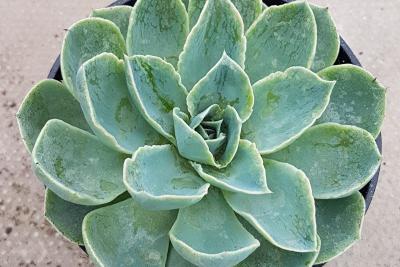
Flowering succulent that grows in flower-like rosette shapes. One of the most unique and showy varieties, Echeveria 'Curly Locks' has wavy blue-green leaves tinged with pink.
Beautiful pink, succulent rosettes which produce interesting flowering bracts in spring and summer.Prefers full sun, or partial shade with moist soil or compost.
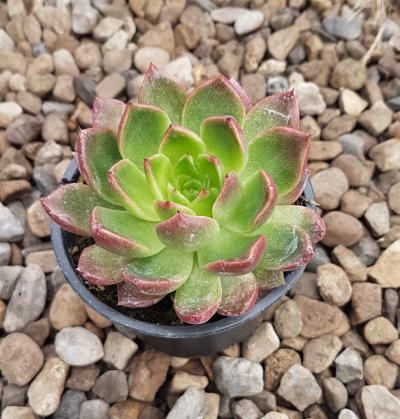
Dense rosettes, clumping, fleshy reddish leaves.
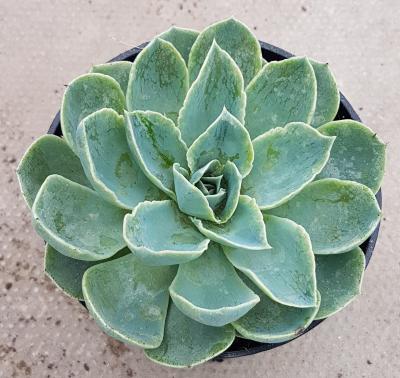
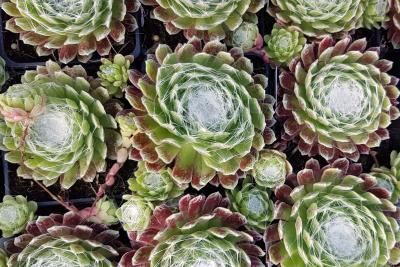
Popular and vigorous succulent, up to 8 inches (20cm) wide, with tight rosettes of flat grey-green leaves that, when mature, form offsets freely to form large solid clumps up to 6 inches (15cm) tall.
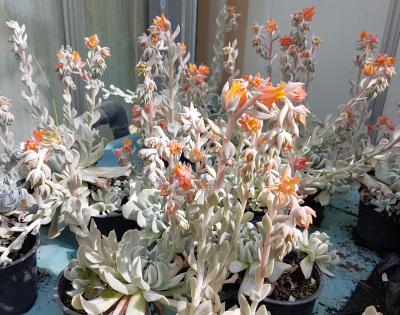
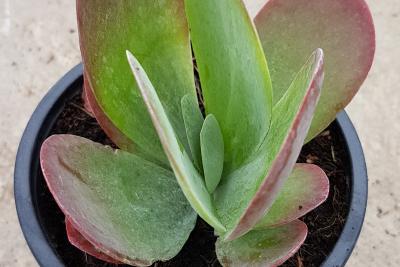
Perennial evergreen succulent. Clump forming producing freely offsets. Grey/green spatulate leaves. 8-12" across, 6-12" high. Fast growing. Restrict water in winter months. Good for container or scree garden.
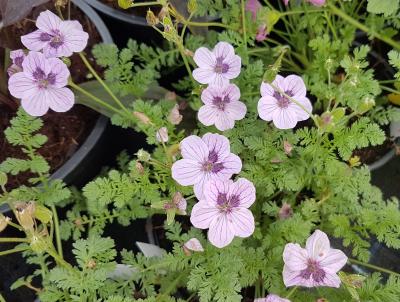
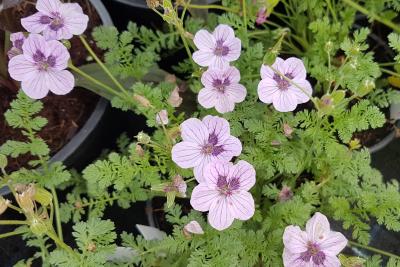
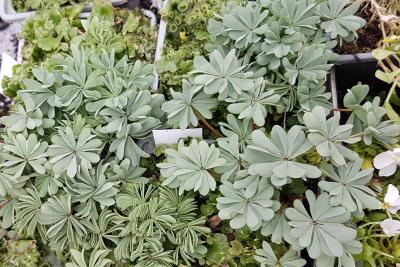
A good Erodium hybrid with pink flowers and nicely marked petals - deep purple veins and the upper petals with dark grey markings. It flowers profusely all summer over mounds of greyish, finely divided foliage. About 15 to 20cm (6" to 8") tall.
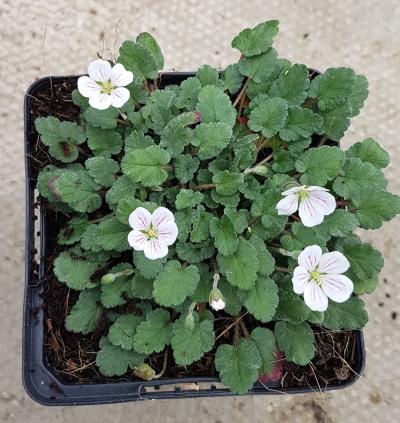
Heron's Bill. Stork's Bill. A pretty mat-forming alpine of green foliage. Umbels of saucer-shaped white flowers. Height 5cm. Spread 20cm. Flowers from June to September. Evergreen. Hardy. Protect from winter wet.
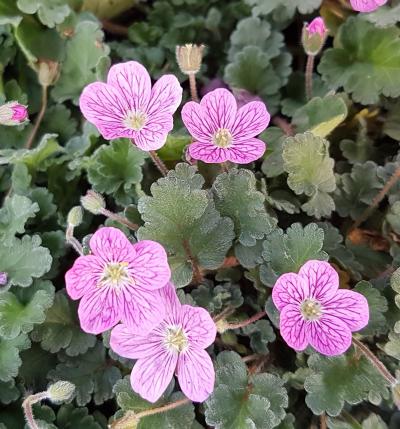
Heron's Bill. Stork's Bill. A pretty mat-forming alpine of green foliage. Umbels of saucer-shaped dark pink flowers. Height 5cm. Spread 20cm. Flowers from June to September. Evergreen. Hardy. Protect from winter wet.
Heron's Bill. Stork's Bill. A pretty mat-forming alpine of green foliage. Umbels of saucer-shaped white flowers. Height 5cm. Spread 20cm. Flowers from June to September. Evergreen. Hardy. Protect from winter wet.
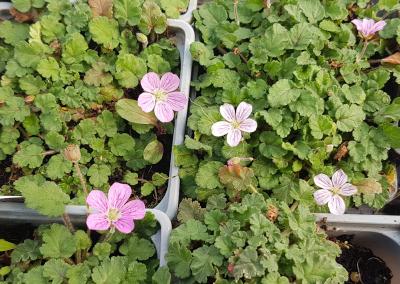
Heron's Bill. Stork's Bill. A pretty mat-forming alpine of green foliage. Double rose-pink flowers. Height 5-10cm. Spread 20cm. Flowers from May to September. Evergreen.
Heron's Bill. Stork's Bill. A pretty mat-forming alpine of green foliage. Umbels of saucer-shaped pink flowers. Height 5cm. Spread 20cm. Flowers from June to September. Evergreen. Hardy. Protect from winter wet.
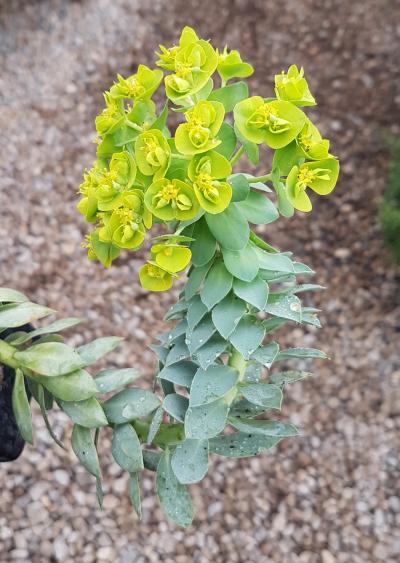
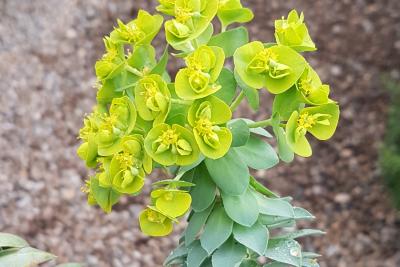
A semi-prostrate perennial with close-set leaves spiralling from base to tip. Leaves are fleshy bright blue-green. Flowers with vivid yellow bracts. Height 30cm. Spread 30cm. Flowers from April to July. Evergreen. Hardy. Harmful if eaten/skin + eye irritant.
Pebbled Tiger Jaws, is a clump-forming, perennial succulent native to the Cape Province of South Africa. Dark green leaves are ovate-triangular in the top view and will reach 1 inch (2.5 cm) long by 0.75 inches (2 cm) wide. The upper side is covered in white tubercles, the margins with small white dots. Yellow flowers late spring early summer. Greenhouse or conservatory. Plants are very easy to grow.
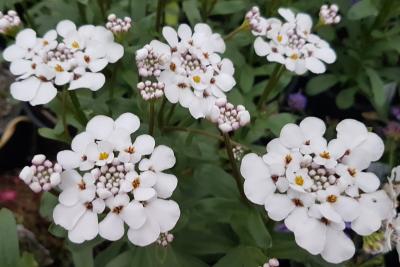
Tufted to small matt forming perennial. Lush green obovate leaves. Clusters of white flowers, with purple veins radiating from the centre, late spring to summer. Good ground cover.
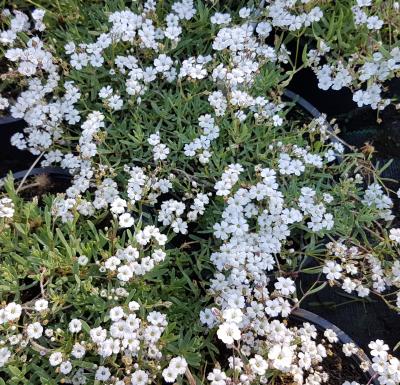
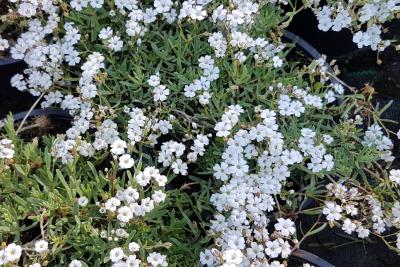
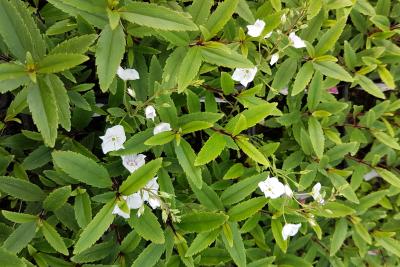
A loose mat-forming perennial producing small bright white flowers over blue-green foliage.
Rock Rose. Sun Rose. An erect to spreading shrub with dark green leaves and saucer-shaped red flowers with a darker eye. Height 20cm. Spread 20cm. Flowers from May to July. Evergreen. Hardy.
Rock Rose. Sun Rose. A prostrate shrub with dark green leaves and saucer-shaped, deep orange flowers. Height 8cm. Spread 30cm. Flowers from April to September. Evergreen. Hardy.
This has yellow flowers. The flower fades to whiter tones as it matures and the foliage is mid-green. Height 30cm. Spread 60cm. Hardy.
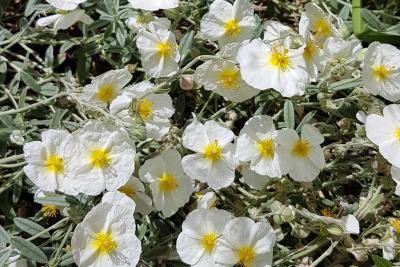
Rock Rose. Sun Rose. A prostrate spreading shrub with grey-green leaves and saucer-shaped, yellow, pink, white or orange flowers. Height 5cm. Spread 25cm. Flowers from May to July. Evergreen.
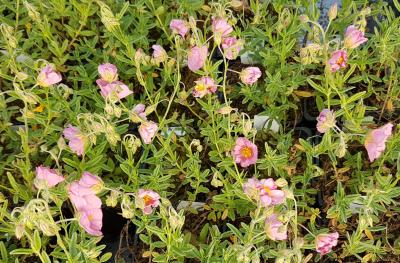
Rock Rose. Sun Rose. A spreading shrub with grey-green leaves and saucer-shaped pink flowers. Height 5cm. Spread 25cm. Flowers from May to July. Evergreen.
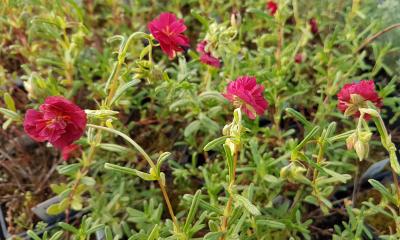
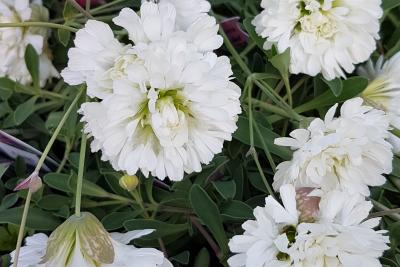
Rock Rose. Sun Rose. A spreading shrub with dark green leaves and saucer-shaped. Very bright pink double flowers with yellow centres. Height 20cm. Spread 30cm. Flowers from April to September. Evergreen. Hardy.
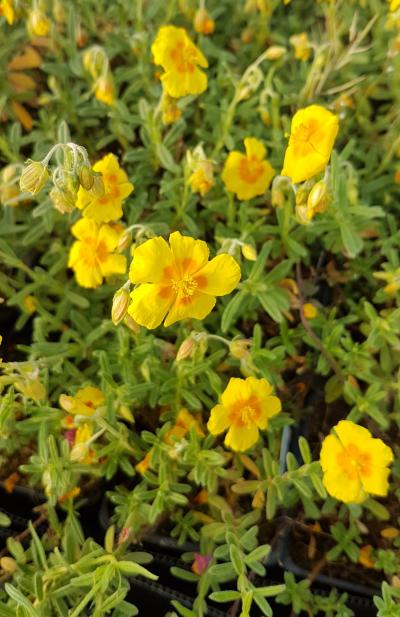
This has yellow flowers. The flowers fade to whiter tones as it matures and foliage is mid green. Height 86cm. Spread 60cm. Hardy
A charming little rock-rose with loosely double flowers in a strong sugar pink, darkening to red around a yellow centre.
Mon - Fri 8:00am - 5:00pm
Sat & Sun 9:00am - 5:00pm

Any questions? Email us or give us a call on 01904 400092.